situated ladders (excerpt)
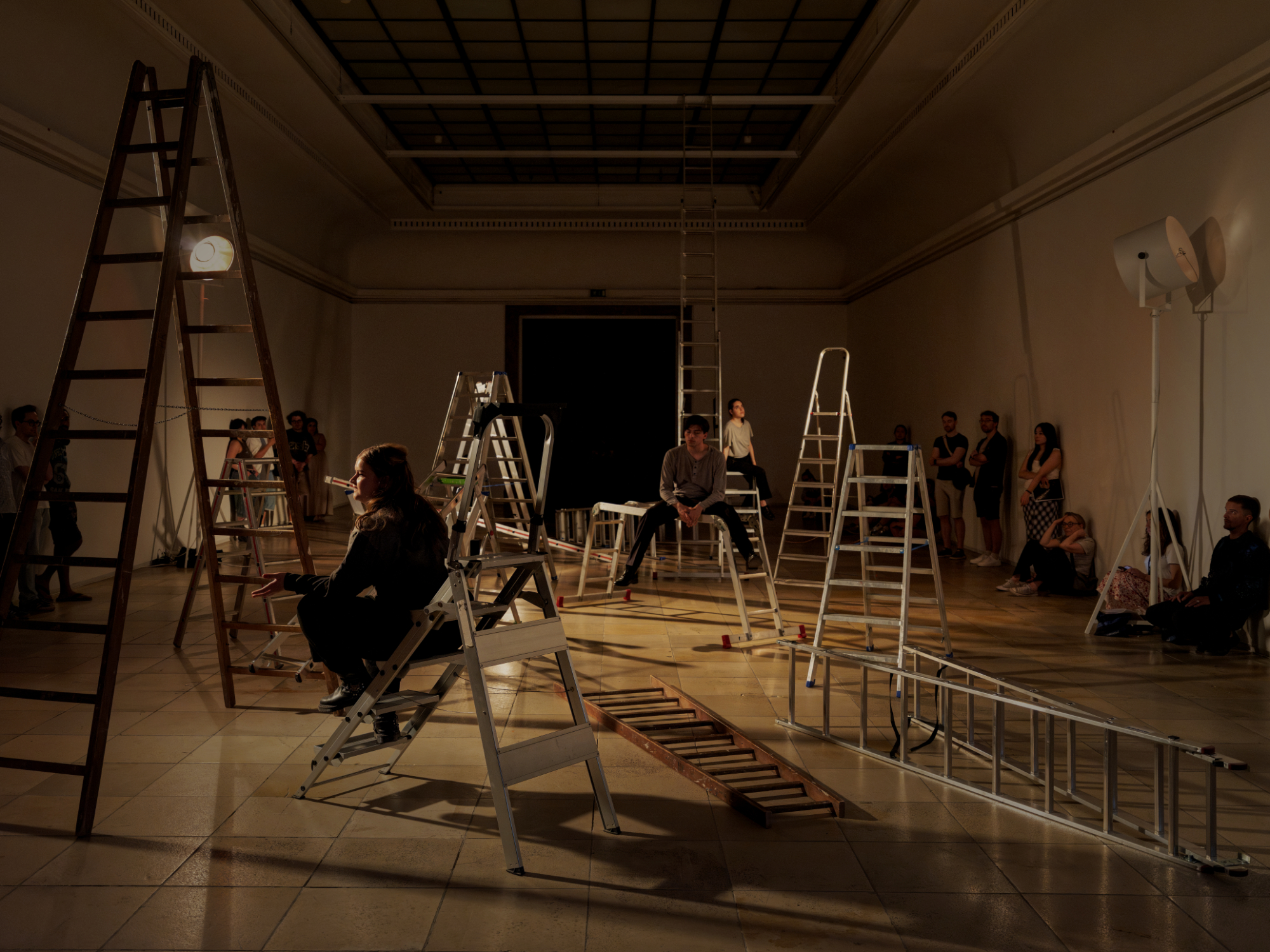
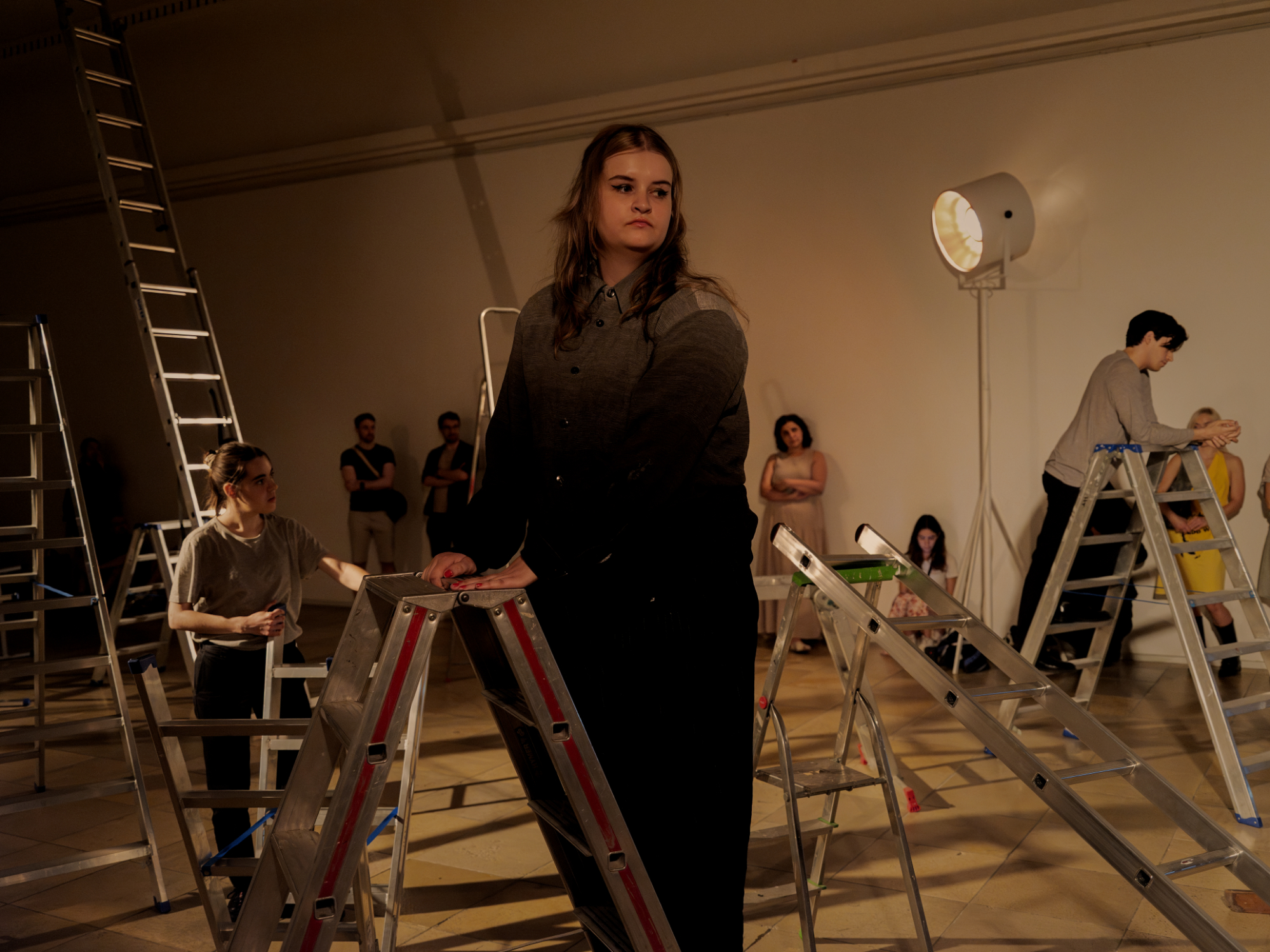
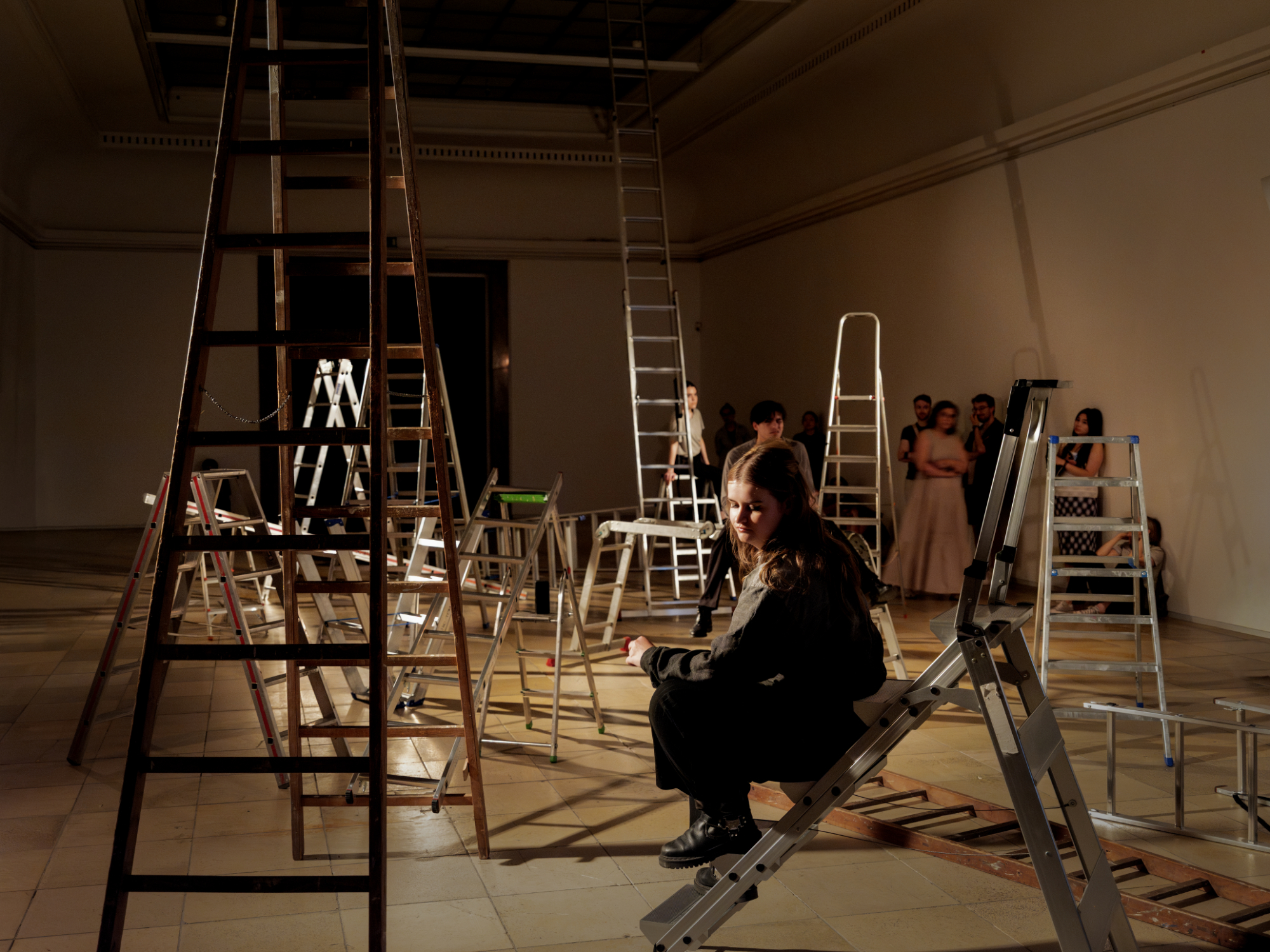
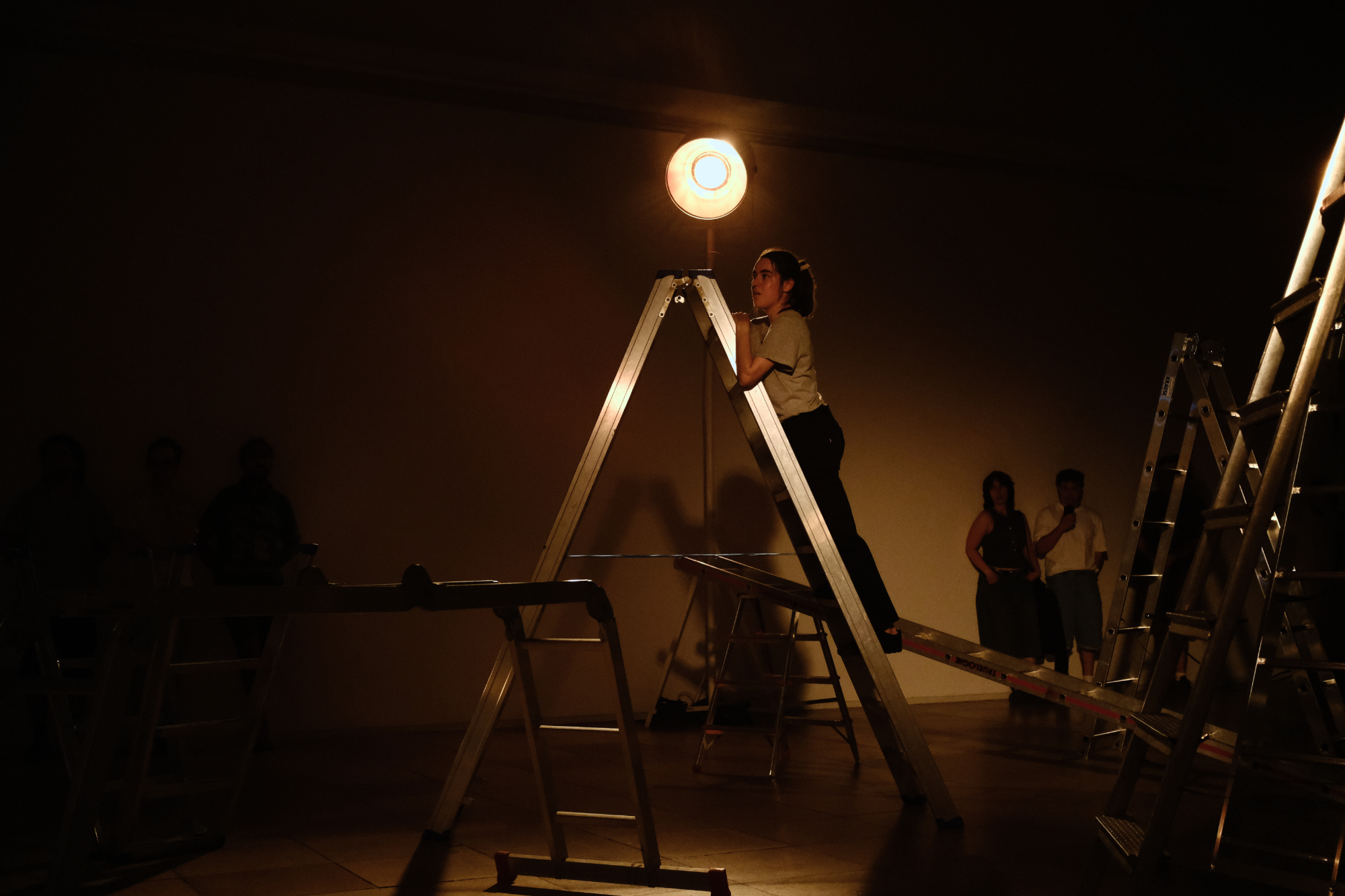
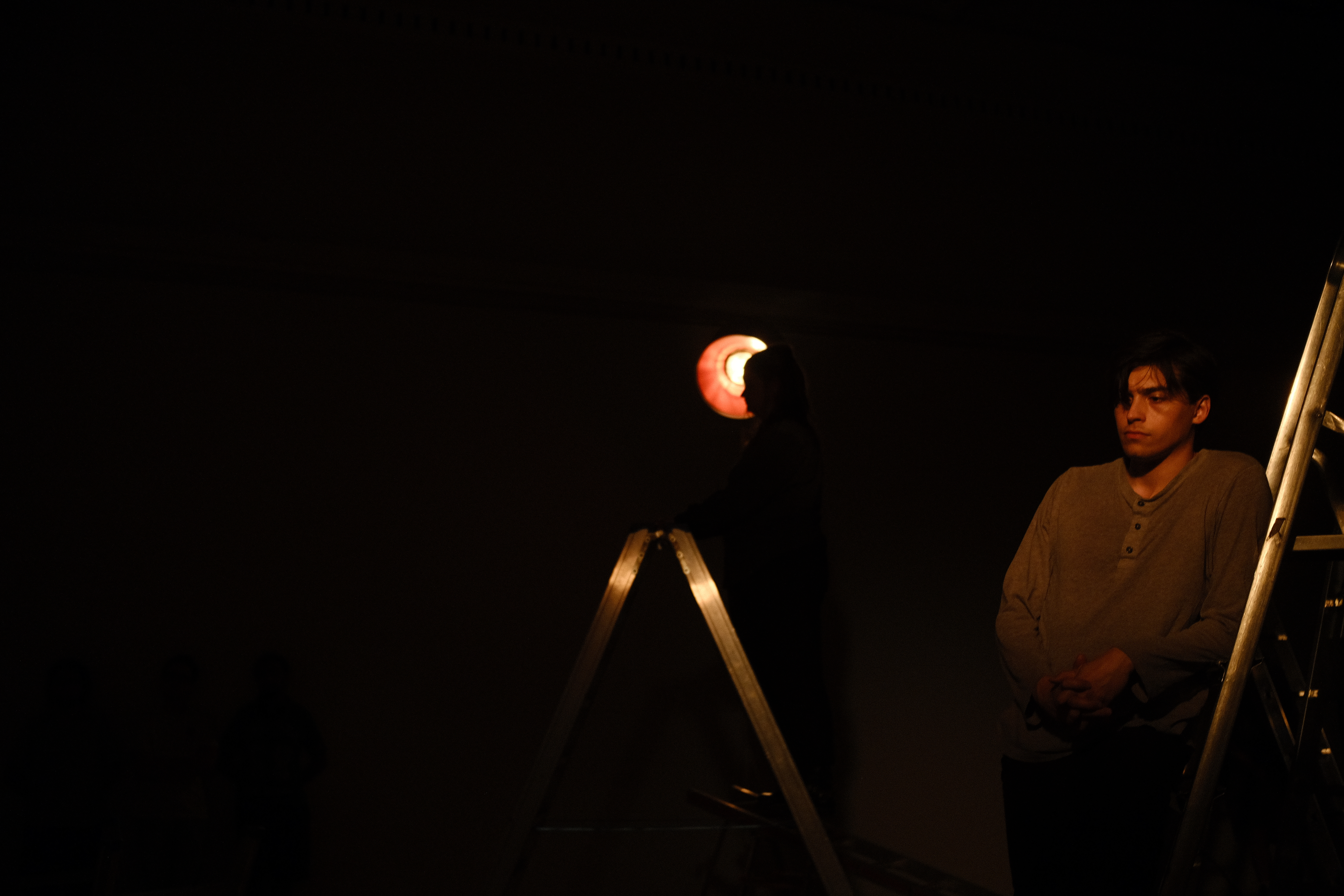
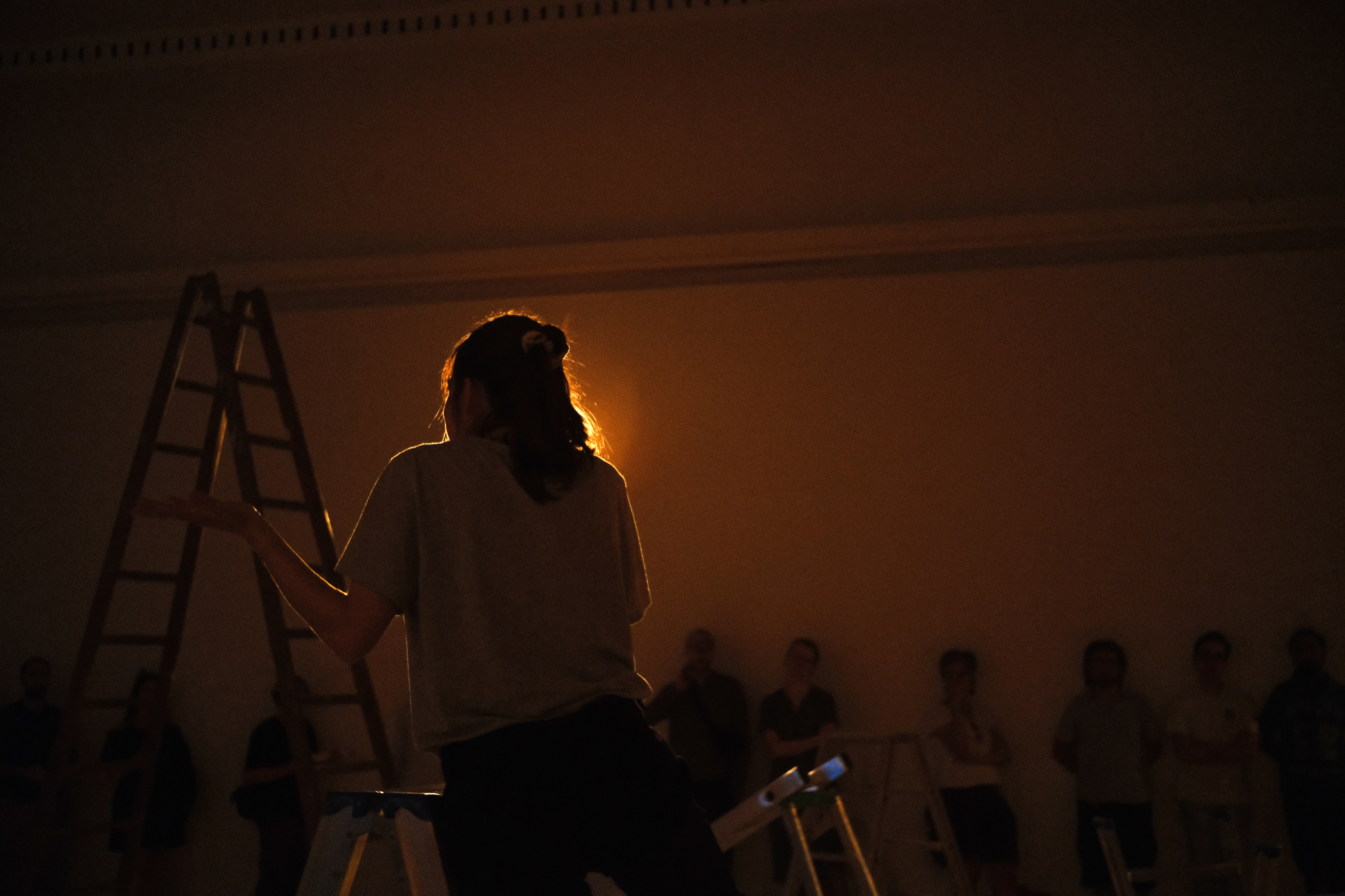
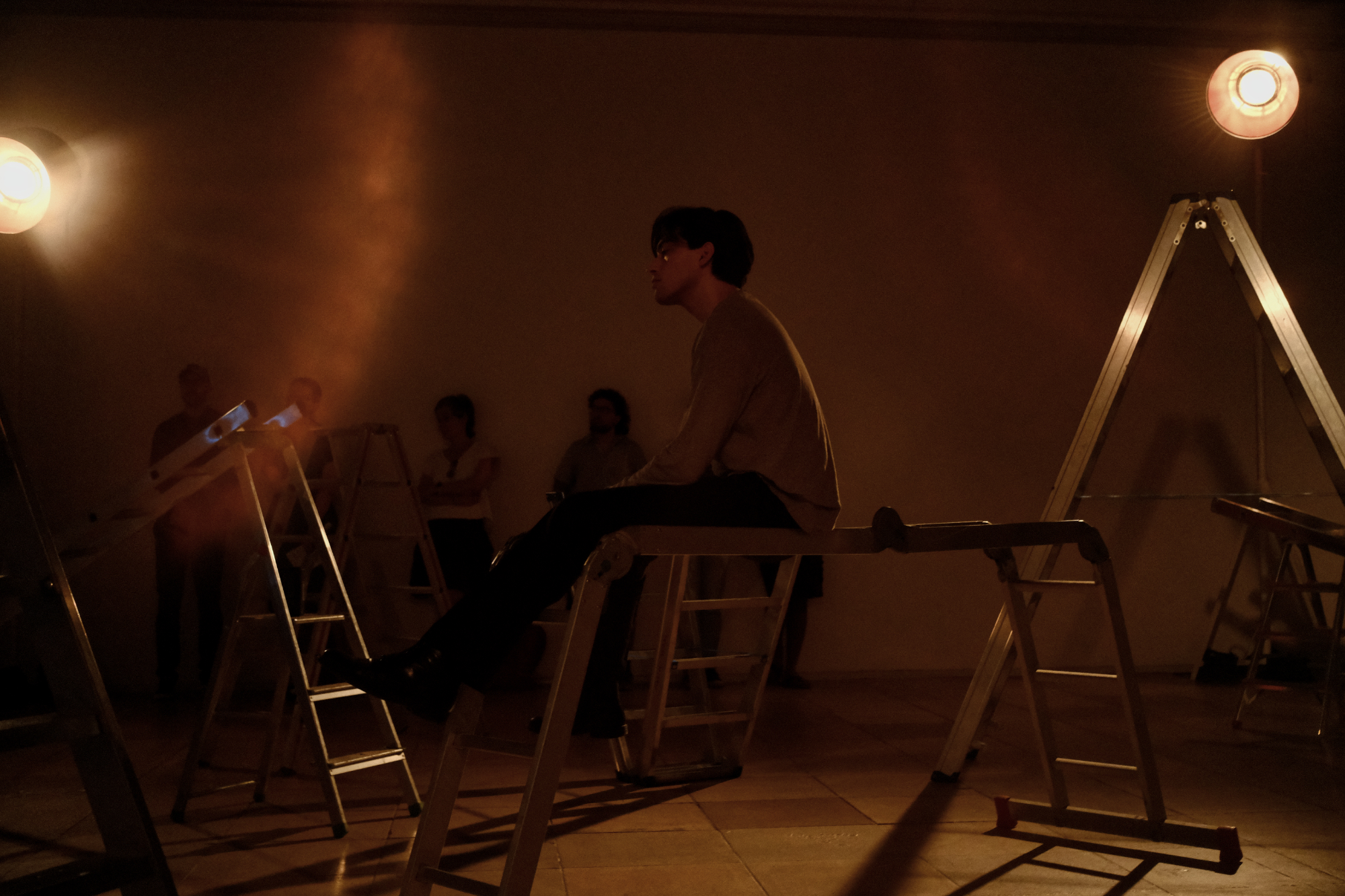
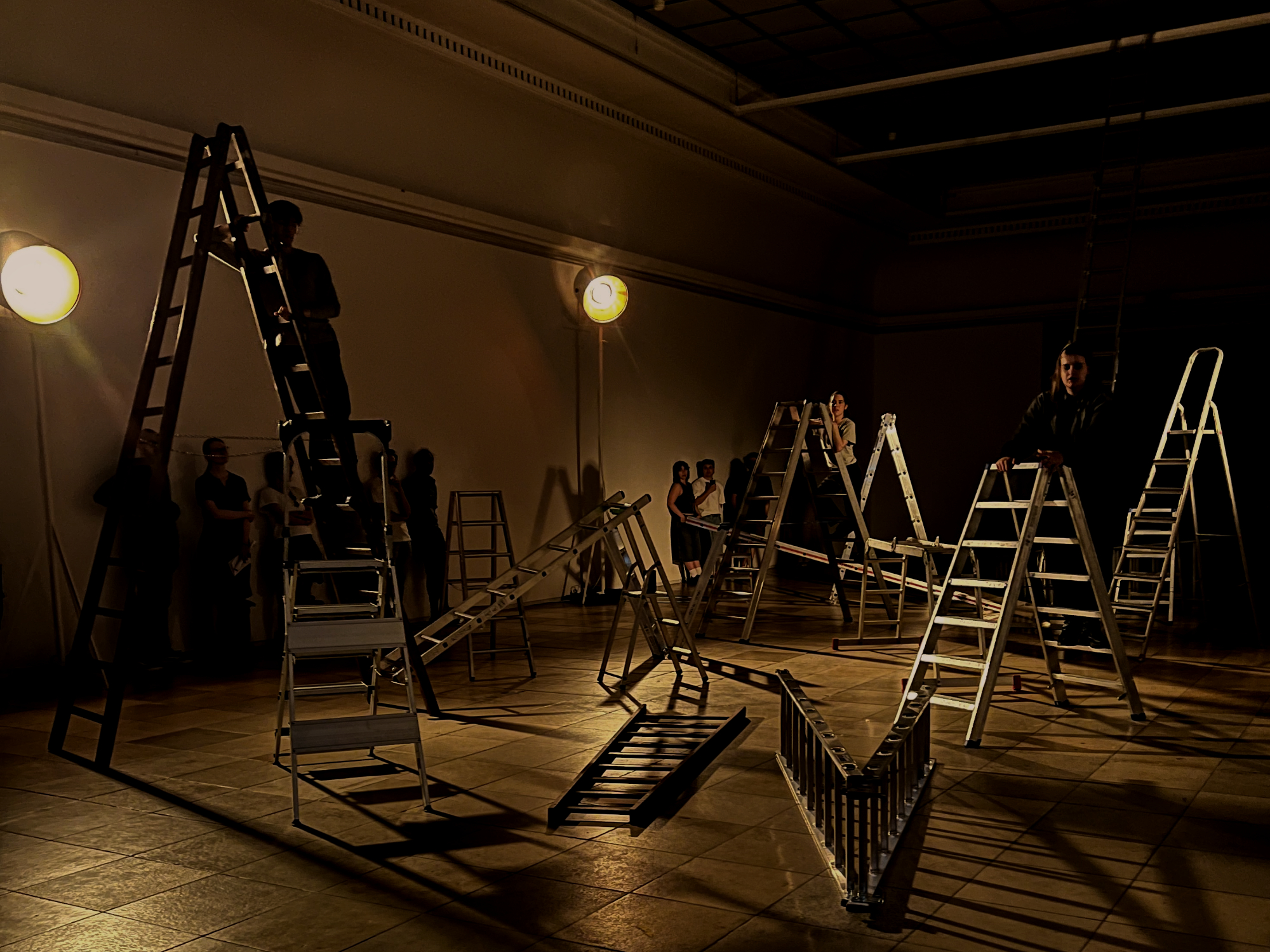
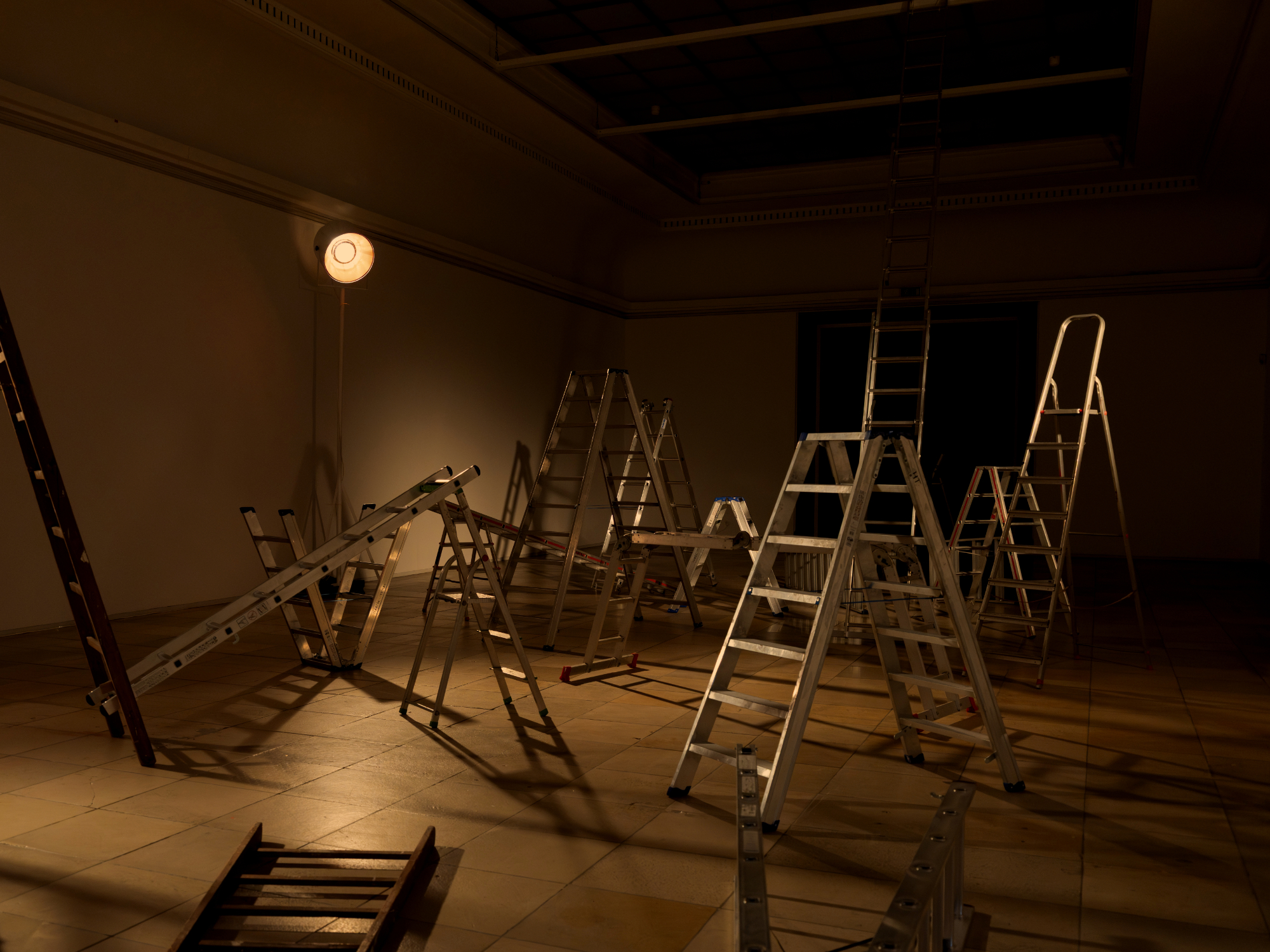
Shaped by resonance, miscommunication and noise, the polyphonic live sculpture situated ladders (excerpt), dissects the linguistic registers through which astrophysical knowledge is constrained. The installation unfolds across a heterogeneous field of ladders, inhabited by three performers who reframe textual fragments drawn from scientific papers documenting experiments in neutrino and dark matter detection. The performance enacts the conditions under which knowledge in astro-particle physics is translated across regimes of language and interpretation — the artwork does not explain this process; it performs it.
situated ladders (excerpt) was presented as part of the group exhibition Neutrinos and Dark Matter at Haus der Kunst, Munich, on 29 May 2026. This version of the work was developed in dialogue with Haus der Kunst Director Andrea Lissoni, AdBK Professor of Photography Armin Linke, and Katrin Bauer, curator of Neutrinos and Dark Matter.
Context and Research
The work originates in an ongoing artistic research project developed within the Collaborative Research Centre SFB 1258 on Neutrinos and Dark Matter, a framework shared by TUM, the Academy of Fine Arts Munich (AdBK), and Haus der Kunst.
The research examines the conditions under which scientific facts become not only visible, but comprehensible and translatable to broader audiences. Rather than contesting the validity of these facts, it addresses the mechanisms that render them accessible and interpretable.
Within this inquiry, a parallel objective has been the development of a visual model capable of representing these conditions. Two such models have been proposed so far, the second offering the most comprehensive articulation to date. This ongoing analysis maps points of convergence and divergence between scientific and artistic modes of representing knowledge, drawing on philosophy of science, science and technology studies (STS), and visual epistemology.
The resulting three-dimensional model is translated into a performative installation: a heterogeneous field of ladders, arranged randomly resembling the model’s own coordinates, inhabited and vocalised by performers who act as neutral agents — temporarily shaped by the epistemic position they occupy. The performers featured in this particular rendition include Giacomelli himself, alongside Mim Ansell and Irene Cuevas.
Here, the ladder is stripped of its instrumental function as a tool of “ascent” and repositioned as a spatial marker of epistemic position: a coordinate within a conceptual topology mapping how knowledge is inter-semiotically translated.
Notes on Production
situated ladders (excerpt) was conceived, researched, scripted and directed by Matteo Giacomelli as a solo undertaking, without dedicated production budget. All elements of the work — including Research, concept development, performance score, direction, set design, and lighting were developed and executed independently; ladders and lighting equipment were drawn entirely from Haus der Kunst’s institutional resources.
The concept for the work was presented to Haus der Kunst Director Andrea Lissoni prior to production and was immediately accepted and received positively, leading to its premiere in the Südgalerie — a space typically reserved for solo exhibitions by established international artists.
The dimensions and architecture of the Südgalerie shaped the scenography and lighting design of this version. Future iterations may adapt to circular, frontal, or traverse configurations, depending on the hosting venue.